






















The role of fibre networks is expanding as enterprises rely more heavily on cloud platforms, distributed applications and digital services that require dependable connectivity between locations. High speed fibre is becoming relevant beyond residential broadband, supporting connections between enterprise sites, cloud environments, data centres and other network locations. Gartner’s research on private cloud connectivity points to growing requirements for secure, high performing connections as mission critical workloads move into cloud environments. This is changing the function of operator networks, with fibre increasingly serving as transport infrastructure for business data exchange rather than only an access medium for households.
Private connectivity services from major cloud providers also illustrate how enterprise requirements are evolving. AWS supports dedicated connections at up to 400 Gbps through Direct Connect, while Microsoft Azure ExpressRoute Direct offers 100 Gbps and 400 Gbps ports. Google Cloud made 400 Gbps Cloud Interconnect generally available in 2026. These capabilities do not indicate that every enterprise requires such capacity. Instead, they show how cloud connectivity is increasingly supported through dedicated network infrastructure alongside conventional internet access.
Optical Networks Adapting to Distributed Cloud Requirements
Operator networks are adapting by expanding optical capacity, cloud adjacency and geographic reach. Arelion reported that 90% of its European and US long haul network supported 400GE in 2025, with more than 250 points of presence offering 400GE. In Africa, Liquid Intelligent Technologies operates more than 116,000 kilometres of fibre and provides cloud connectivity through its terrestrial and international network. In Asia Pacific, PLDT has upgraded optical transport capacity to support traffic between international cable infrastructure, its national backbone and global cloud providers. Together, these examples show how high speed fibre is becoming part of a broader connectivity chain linking businesses with distributed digital infrastructure.
The development also changes the requirements placed on network operators. Capacity remains important, but enterprise and cloud customers can also require predictable performance, private connectivity and access across metropolitan, national and international routes. This is creating a broader role for high speed fibre as operators adapt networks around increasingly distributed enterprise and cloud architectures.
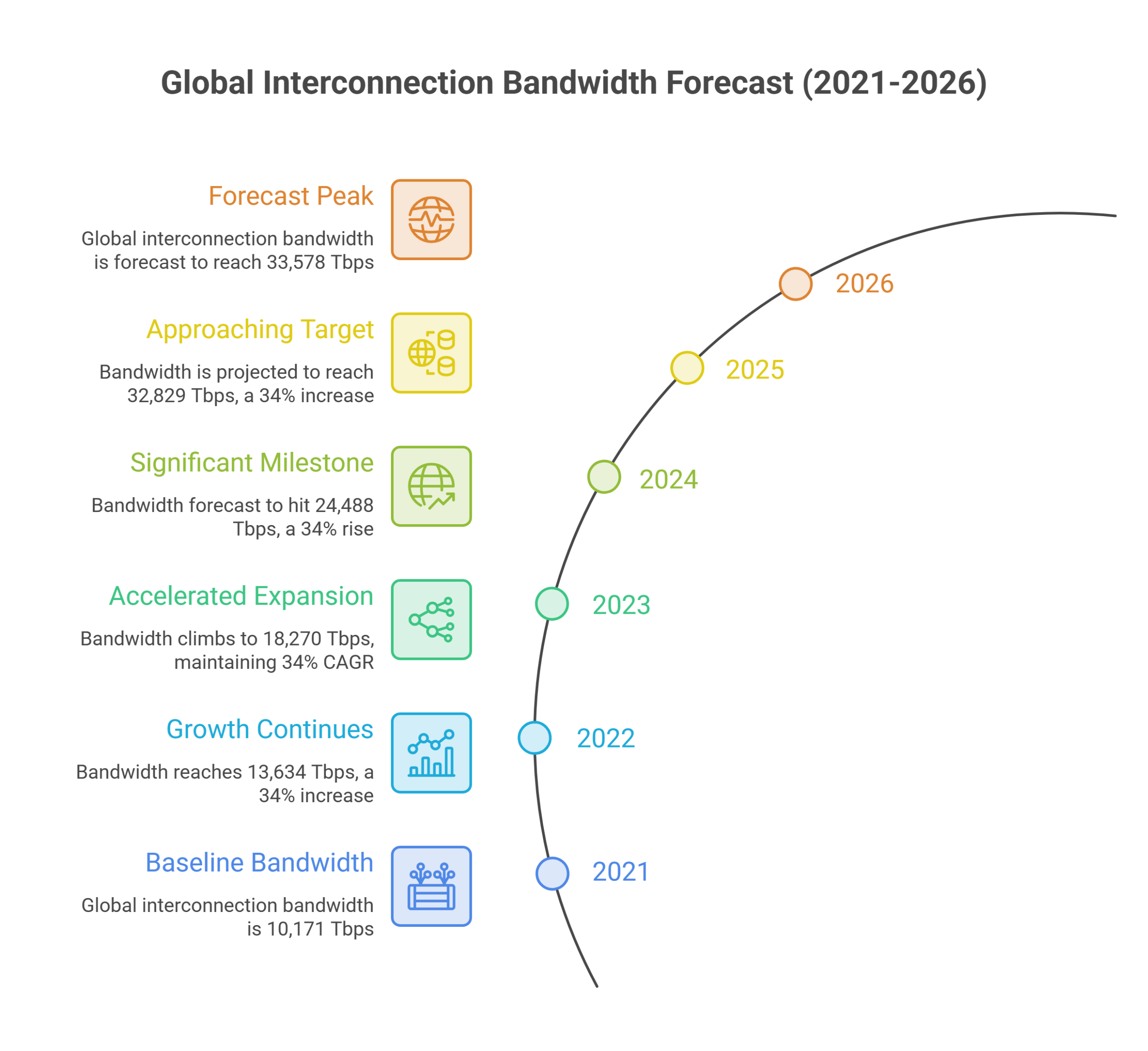
Key Takeaway: Rising interconnection requirements are expanding the role of fibre networks in connecting enterprises, cloud platforms and distributed digital infrastructure.
Private Connectivity Expanding Across Enterprise Networks
The growth of cloud based workloads is changing how enterprises approach connectivity between offices, data centres and external platforms. High speed fibre can provide dedicated paths for organisations that require predictable bandwidth and private connections rather than relying solely on shared internet access. AWS Direct Connect, Microsoft Azure ExpressRoute and Google Cloud Interconnect all support dedicated connectivity between customer infrastructure and cloud environments, with capacity options extending into hundreds of gigabits per second. These services illustrate how cloud connectivity is becoming an integrated part of enterprise network planning.
The requirements also extend beyond bandwidth. Enterprises operating distributed applications can need consistent performance between multiple locations, while organisations with larger data transfers may require dedicated optical capacity. This is encouraging network operators to place greater emphasis on metro reach, long haul connectivity and direct access to cloud and interconnection facilities. High speed fibre is therefore becoming part of a wider enterprise architecture in which optical networks connect multiple points of digital activity rather than serving as a simple last mile link.
Optical Transport Networks Adapting to Cloud and Enterprise Workloads
Operators are responding by expanding fibre capacity and positioning networks closer to cloud and data centre ecosystems. Arelion reported that 90% of its European and US long haul network supported 400GE in 2025, with more than 250 points of presence offering 400GE. Liquid Intelligent Technologies operates more than 116,000 kilometres of fibre across Africa and provides direct cloud connectivity through its terrestrial and international network. PLDT has also upgraded its optical transport infrastructure to support traffic between international cable systems, its national backbone and global cloud providers. These developments show how operators in different regions are adapting networks around increasingly distributed sources and destinations of enterprise traffic.
The resulting network model connects enterprise sites, cloud platforms, data centres and international infrastructure through multiple fibre layers. This places greater emphasis on network reach, service reliability and the ability to provision capacity across different routes. High speed fibre also supports a broader range of wholesale services, including dedicated wavelengths and private cloud connections, allowing operators to serve customers with requirements that differ from conventional broadband.
As these networks become more closely integrated with enterprise IT environments, operators must also manage the relationship between physical fibre infrastructure and increasingly flexible service requirements. This is creating demand for connectivity that can be provisioned across metropolitan and long haul routes while maintaining defined performance characteristics. The same evolution is also opening the way toward higher capacity optical connectivity, where data centre interconnection requirements place additional demands on optical transport networks.