



















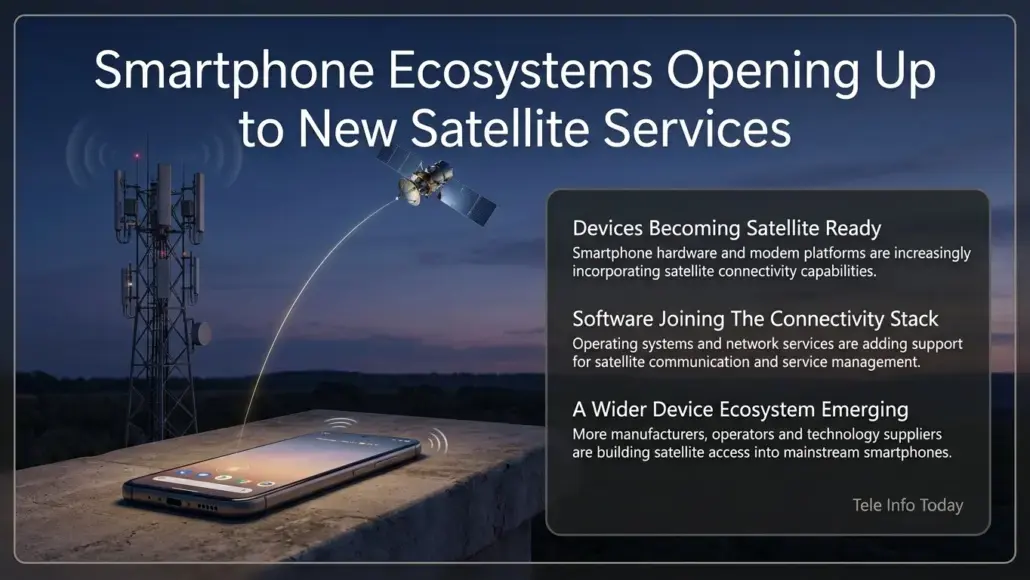

Satellite connectivity is moving beyond specialised communication hardware and becoming part of the mainstream mobile device conversation. Smartphone Ecosystems are increasingly incorporating satellite capability through device hardware, modem platforms, operating systems and operator support, creating a more direct connection between terrestrial mobile services and networks in space. The significance is not simply that smartphones can communicate with satellites, but that satellite access is increasingly being built into the broader technology stack already used by mobile devices. Counterpoint Research projects that satellite capable smartphones could account for 46% of global smartphone shipments by 2030. That forecast points to a potential shift from satellite connectivity being an occasional premium feature toward becoming a more established component of handset design and mobile service planning. The development is also broadening beyond individual manufacturers as chipset vendors, operating system developers and operators increasingly participate in the ecosystem.
Smartphone Hardware Bringing Satellite Connectivity Closer to the Mainstream
The expansion of satellite capability is creating new requirements across the handset architecture. Modems, antennas, software and network provisioning must work together before a smartphone can reliably use satellite connectivity. Smartphone Ecosystems are therefore becoming an important part of the wider satellite and mobile convergence story. The emerging hardware direction includes:
- NTN capable modem platforms integrated into consumer devices.
- Antenna systems designed to support satellite links alongside terrestrial connectivity.
- Device software capable of recognising and managing satellite network availability.
- Operator and service provisioning that determines which satellite capabilities a device can access.
Qualcomm’s 2026 X105 5G Modem RF platform illustrates this direction by integrating standards based Non Terrestrial Network capability into a modem platform designed for consumer devices. At the operating system level, Android has also introduced satellite support into its telephony framework, showing that the transition extends beyond hardware alone.
Operating Systems and Operators Expanding the Device Layer
Satellite functionality increasingly depends on coordination between handset software and mobile network services. Smartphone Ecosystems must account for network selection, service entitlement and device configuration alongside the underlying satellite radio connection. This makes the smartphone a more active participant in managing the transition between terrestrial and satellite access. The ecosystem is broadening through several developments:
- Operating systems are adding frameworks for satellite communication and network management.
- Chipset vendors are integrating NTN capabilities into newer modem platforms.
- Smartphone manufacturers are introducing satellite support across selected device ranges.
- Mobile operators and satellite providers are developing service arrangements around compatible handsets.
Smartphone Hardware and Software Building a Broader Satellite Stack
The transition toward satellite connected handsets is extending beyond modem capability into the wider device architecture. Smartphone Ecosystems now involve coordination between chipset vendors, operating system developers, handset manufacturers, mobile operators and satellite providers. This creates multiple dependencies that must work together before satellite connectivity can become a reliable part of everyday mobile service. Android 15 and later provides platform support for satellite connectivity, including emergency services, messaging, location sharing and constrained data routing. Its satellite telephony stack interacts with the device modem through a standardised hardware interface, while network configuration can also be managed through carrier settings and GSMA service entitlement mechanisms. This shows that satellite access is becoming embedded deeper into the operating system and network management layers. The ecosystem requirements increasingly include:
- NTN capable modem platforms and compatible radio hardware.
- Antenna performance suitable for satellite links.
- Operating system support for satellite network selection and routing.
- Service entitlement and operator provisioning.
- Device certification and interoperability testing.
Qualcomm’s 2026 X105 5G Modem RF platform further illustrates the hardware direction, integrating standards based NTN capability into a modem platform intended for consumer devices. The development indicates that satellite connectivity is increasingly being incorporated into mainstream modem roadmaps rather than remaining a specialised device function.
Multiple Device Makers Expanding the Emerging Satellite Market
The handset market is also becoming more diverse. Counterpoint Research reported that more than 10 smartphone brands were offering satellite connectivity by April 2026, while the market remained concentrated among premium devices. Smartphone Ecosystems are therefore expanding, but adoption is developing unevenly across manufacturers and price segments. Counterpoint’s 2025 shipment data shows the early market concentration:
- Apple accounted for 71.6% of satellite capable smartphone shipments.
- Samsung represented 15.9%.
- Huawei accounted for 6.1%.
- Google represented 2.2%.
- HONOR accounted for 1.9%.
Counterpoint also identifies Samsung, Xiaomi, OPPO, HONOR and vivo among Android manufacturers aligning with 3GPP NTN approaches, while Apple, Huawei and Google have largely used proprietary satellite systems. The distinction matters because proprietary architectures can support tightly integrated services earlier, while standards based approaches are intended to support broader interoperability and scale. Smartphone Ecosystems are consequently developing along two paths: proprietary satellite implementations that already support selected services and standards based NTN systems designed to connect more devices and networks through common technical frameworks. 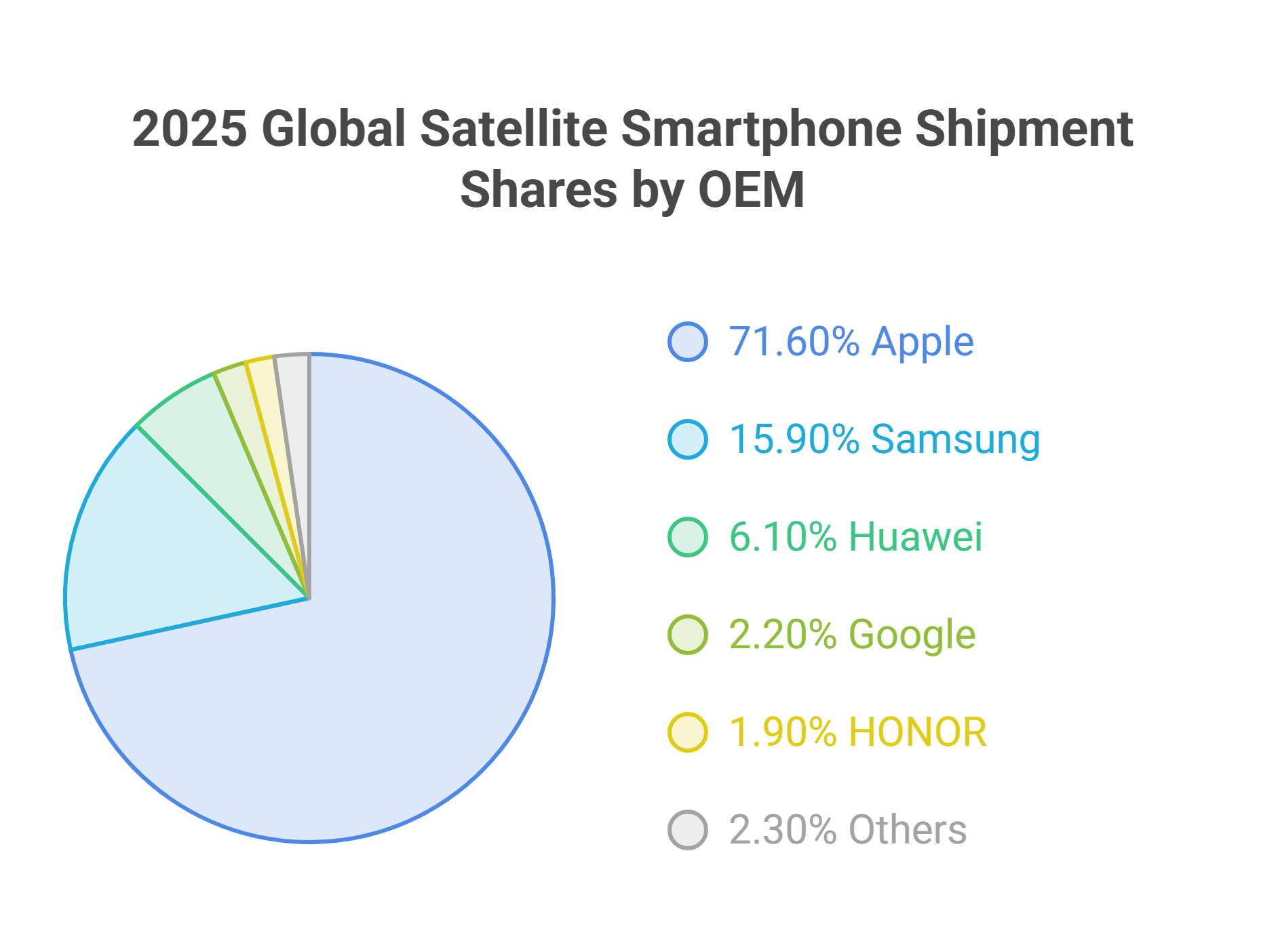 The distribution shows that satellite capable smartphone shipments were concentrated among a small group of manufacturers in 2025, while the wider OEM ecosystem was beginning to expand.
Smartphone Ecosystems Broadening the Satellite Connectivity Layer
Satellite functionality is becoming increasingly embedded across the handset hardware, software and service stack. Smartphone Ecosystems are moving beyond isolated satellite features toward broader interoperability between devices, operators and satellite networks, although proprietary and standards based approaches are still developing in parallel.The direction is becoming clearer:
- Modem and antenna capabilities are bringing satellite connectivity into mainstream device architectures.
- Operating system support is integrating satellite functions into wider mobile software frameworks.
- Expanding device participation is creating a broader base for satellite enabled services.
As satellite capabilities mature across smartphones, the next opportunity extends beyond consumer handsets toward enterprise satellite connectivity, where satellite links can support organisations operating across remote and mobile environments.
References
- Counterpoint Research – Smartphones With Satellite Connectivity to Reach 46 Percent of Global Shipments by 2030 – 2026
- Android Open Source Project – Satellite connectivity – 2026
- Qualcomm – Qualcomm Announces 5G Advanced Leap with Qualcomm X105 5G Modem RF – 2026