

















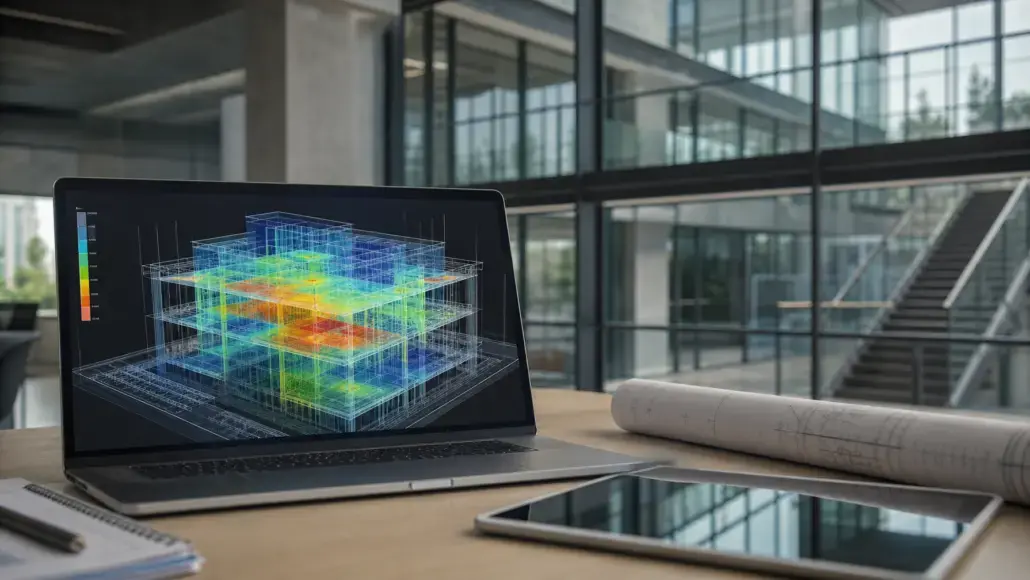

The challenge of providing high-quality wireless connectivity inside modern buildings has intensified as construction materials become more advanced and network frequencies move higher into the spectrum. Modern architectural designs often incorporate low-emissivity glass and reinforced concrete structures that, while energy-efficient and structurally sound, present significant barriers to radio frequency signals. Digital twin technology has become indispensable for architects and telecom engineers aiming to optimize indoor mobile coverage during the design and renovation phases of a project. By creating a detailed virtual replica of a building’s internal environment, stakeholders can simulate signal propagation with extreme accuracy, ensuring that every corner of a facility meets the connectivity demands of its occupants.
The transition to 5G and future 6G networks necessitates a more granular approach to indoor planning. Higher frequency bands offer greater bandwidth but suffer from limited penetration capabilities and higher susceptibility to interference from physical objects. A digital twin allows for the modeling of every partition, furniture arrangement, and metallic surface within a building. This virtualized testing ground enables engineers to identify “dead zones” before a single cable is laid, allowing for the strategic placement of small cells and distributed antenna systems. This proactive design philosophy significantly reduces the cost of post-construction connectivity fixes.
Modelling RF Propagation in Complex Architectural Environments
The interaction between radio waves and building materials is a complex physical process that depends on frequency, incident angle, and material properties. Traditional planning tools often use simplified models that fail to capture the nuances of modern building interiors. Digital twins overcome these limitations by integrating high-resolution 3D models with advanced ray-tracing algorithms. These simulations account for reflection, diffraction, and scattering, providing a realistic visualization of how signals will behave in a specific environment. By adjusting the virtual model, engineers can test the impact of different wall thicknesses or window coatings on the overall indoor mobile coverage quality.
Building designs are rarely static, and the digital twin provides a flexible platform for managing changes throughout the construction lifecycle. When an architect decides to move a structural pillar or change a room’s layout, the digital model can be updated instantly to assess the impact on the wireless network. This real-time feedback loop ensures that the final build remains optimized for connectivity, even as other design priorities evolve. The ability to visualize signal strength through heat maps within the virtual building helps non-technical stakeholders understand the importance of connectivity-focused design decisions.
The integration of Internet of Things sensors into the building’s infrastructure provides a continuous stream of data to the digital twin. This real-world performance data is used to refine the virtual models, making them increasingly accurate over time. By comparing the simulated results with actual signal measurements, engineers can identify subtle environmental factors that affect performance, such as seasonal changes in foliage outside windows or fluctuations in occupancy levels. This hybrid approach, combining virtual modeling with real-world data, represents the pinnacle of modern indoor network planning.
Strategic Integration of Distributed Antenna Systems
For large-scale facilities like airports, stadiums, and high-rise offices, a single outdoor base station is rarely sufficient to provide reliable service. Distributed antenna systems are the standard solution for these environments, but their design is notoriously difficult. Digital twin simulations allow engineers to optimize the placement of antennas to minimize interference and maximize throughput. The virtual model can simulate the traffic patterns of thousands of users, identifying high-demand areas where additional capacity is needed. This data-driven approach ensures that the system is sized correctly from the outset, avoiding both underperformance and unnecessary capital expenditure.
The cabling and power requirements for a distributed antenna system are extensive and must be coordinated with other building systems. A digital twin provides a centralized platform for managing these interdependencies, allowing for the visualization of cable routes alongside plumbing, electrical, and HVAC systems. This spatial awareness prevents conflicts during the installation phase, reducing labor costs and project delays. In addition, the virtual model can be used to plan for future upgrades, ensuring that there is sufficient space and power capacity to accommodate new hardware as network standards evolve.
Maintenance of indoor networks is simplified through the use of digital twins. When a component fails, the virtual model can pinpoint its exact location and provide technicians with a detailed map of the surrounding infrastructure. This reduces the time spent on troubleshooting and minimizes disruptions to building occupants. The digital twin also acts as a repository for maintenance logs and firmware versions, ensuring that the network remains secure and up-to-date throughout its operational life.
Enhancing Building Design through Connectivity Simulations
The synergy between telecommunications and architecture is reaching a new level of maturity through digital twin technology. Architects are now using connectivity simulations to inform the selection of building materials and the orientation of structures. For example, a digital twin can demonstrate how the angle of a building’s facade relative to nearby cell towers will affect signal penetration. This information allows for subtle adjustments to the design that improve performance without compromising aesthetic goals. The result is a structure that is not only beautiful but also inherently optimized for indoor mobile coverage.
Sustainable building practices are also being enhanced by virtual modeling. By optimizing the placement of wireless hardware, engineers can reduce the total power consumption of the indoor network. Digital twin simulations help in designing systems that dynamically adjust their output based on occupancy levels, ensuring that energy is not wasted on empty rooms. This focus on energy efficiency contributes to the building’s overall sustainability certifications, such as LEED or BREEAM, and reduces long-term operational costs for the owner.
The relationship between indoor connectivity and power reliability is another critical area of focus. While optimizing signal strength, engineers must also consider the potential for power failure modelling to understand how backup energy systems will sustain the indoor network during a grid outage. By integrating power simulations into the digital twin, designers can ensure that emergency communications remain functional even when the main power supply is lost. This holistic approach to building design prioritizes the safety and connectivity of occupants in all scenarios.
Future Proofing Indoor Networks for 6G and Beyond
As the industry looks toward the arrival of 6G, the requirements for indoor connectivity will become even more demanding. Expected features like terahertz frequencies and sub-centimeter positioning will require a level of precision in building design that only digital twins can provide. The virtual models will need to capture the molecular properties of materials and the precise movement of every object within a space. This ultra-high-fidelity modeling will enable the creation of “smart skins” for buildings that can actively reflect or refract signals to maintain perfect coverage.
The role of artificial intelligence in managing indoor networks will grow significantly. AI algorithms will use the data from digital twins to autonomously reconfigure networks in real-time, responding to changing environmental conditions or sudden spikes in demand. This self-optimizing network will be able to predict and prevent performance issues before they affect users, providing a level of reliability that matches traditional wired connections. The digital twin serves as the training ground for these AI systems, providing the vast amounts of data needed to develop sophisticated control algorithms.
The digital twin is not just a tool for today’s networks, it is the foundation for the metaverse and other immersive digital experiences. These applications require low-latency, high-bandwidth connections that are consistently available throughout a building. By ensuring that wireless access is optimized from the design phase, digital twin technology is enabling a new era of human interaction and productivity. The buildings of the future will be more than just physical structures, they will be intelligent environments that effectively integrate the physical and digital worlds.
Streamlining the Deployment of Small Cell Technology
Small cells are a critical component of the 5G ecosystem, providing the densification needed to support high-speed data in urban environments. However, their deployment in indoor spaces is often hindered by aesthetic concerns and logistical hurdles. Digital twins help overcome these barriers by providing a virtual environment to test different mounting options and enclosure designs. Architects can use the model to see how a small cell will look in a specific room, allowing for designs that blend into the décor or are completely hidden from view.
The placement of small cells must also be coordinated with other wireless systems, such as Wi-Fi and Bluetooth. Digital twin simulations can model the potential for interference between these different technologies, ensuring that they can coexist without degrading performance. This multi-protocol modeling is essential for creating the reliable wireless environments needed for modern enterprise applications. By optimizing the entire wireless ecosystem within a single virtual model, engineers can deliver a superior user experience.
Deployment costs are significantly reduced when small cell locations are pre-validated through a digital twin. Field crews arrive at the site with a clear set of instructions and a 3D map of the installation points, reducing the time spent on-site and the likelihood of errors. This efficiency is vital for large-scale rollouts that involve thousands of nodes across a regional or national building portfolio. The digital twin platform provides a centralized command center for managing these complex projects, ensuring that every installation meets the required performance standards.