


















The initial deployment of 5G was largely defined by its impact on the consumer market faster download speeds for smartphones and lower latency for mobile gaming. However, the true transformative power of the technology is being realized in its second act: the transition to 5G-Advanced. This phase of telecommunications evolution, standardized under 3GPP Release 18 and beyond, is designed specifically to meet the grueling demands of the industrial sector. The implementation of 5G advanced enterprise IoT is the catalyst for a new era of hyperconnected industry, providing the high-bandwidth, ultra-reliable, and low-latency communication required for the mass deployment of autonomous robots, intelligent sensors, and real-time digital twins. This is not just an upgrade to a network; it is the construction of a new digital foundation for the global enterprise.
The Architecture of Private 5G Networks in Industry
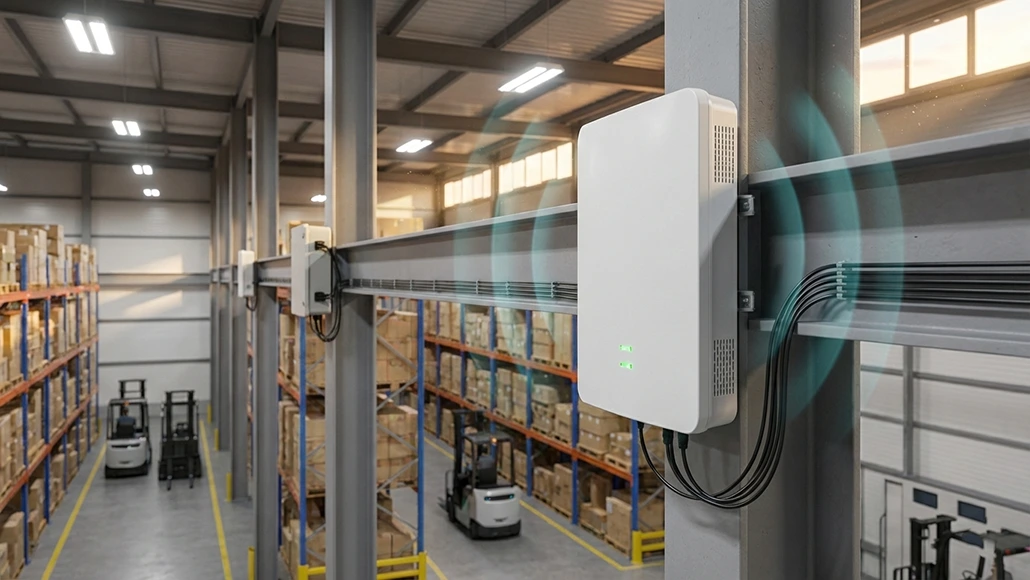
A defining characteristic of 5G advanced enterprise IoT is the rise of the private 5G network. Unlike the public networks managed by telecommunications giants, a private 5G network is a dedicated piece of infrastructure built within the confines of a specific industrial site a factory, a port, or a mine. This allows the enterprise to have complete control over its connectivity, prioritizing traffic for critical machines and ensuring that data never leaves the premises. This “on-site” connectivity is essential for the reliability of 5G enterprise solutions. In a smart factory, thousands of sensors may be competing for bandwidth; a private network ensures that the sensor responsible for an emergency stop command always has the highest priority, preventing accidents and ensuring continuous production.
Edge Computing Technology and the End of Latency
The marriage of 5G-Advanced and edge computing technology is the secret to the real-time responsiveness of modern IoT systems. Traditionally, data from sensors had to be sent to a distant cloud server for processing, introducing a delay that is unacceptable for mission-critical tasks. 5G advanced enterprise IoT solves this by placing the processing power directly at the edge of the network often within the same facility as the machines themselves. This allows for “closed-loop” control, where an autonomous vehicle can process its surroundings and make a split-second decision without waiting for instructions from the cloud. This proximity to the data source is the key to unlocking the full potential of industrial IoT, enabling a level of precision and safety that was previously impossible.
Smart Connectivity and the High-Density Sensor Revolution
One of the most impressive feats of 5G-Advanced is its ability to support an unprecedented density of devices. In a traditional Wi-Fi or 4G environment, the network becomes congested and unreliable when too many devices are connected in a small area. 5G advanced enterprise IoT is designed to support up to one million devices per square kilometer. This allows for the “instrumentation” of everything within an industrial environment from the smallest handheld tool to the largest heavy-duty crane. This smart connectivity provides managers with a granular, real-time view of their entire operation, allowing them to track the location of assets, monitor the temperature of sensitive materials, and identify inefficiencies in the workflow as they happen.
Telecom Digital Transformation and the Software-Defined Network
The transition to 5G-Advanced is a core part of the broader telecom digital transformation. We are moving away from a world of hardware-heavy “black boxes” toward software-defined networks (SDN) and network function virtualization (NFV). In a 5G advanced enterprise IoT environment, the network is managed as a series of software slices. Each “slice” can be customized with specific performance characteristics one for high-definition video surveillance, another for low-latency robotics control, and a third for massive-scale sensor monitoring. This flexibility allows the enterprise to adapt its connectivity infrastructure to the changing needs of the business, ensuring that the network is always a driver of efficiency rather than a bottleneck.
Securing Mission-Critical Connectivity in the IoT Era
As enterprises become more dependent on their digital nervous system, the consequences of a network failure or a cyberattack become catastrophic. 5G advanced enterprise IoT addresses this through advanced security features built directly into the network architecture. This includes end-to-end encryption, enhanced identity management, and the use of AI to monitor for unusual patterns of network traffic. Because 5G-Advanced uses a “distributed” architecture, it is more resilient to failure; if one node goes down, the rest of the network can automatically reroute traffic to maintain connectivity. This level of secure, mission-critical connectivity is the foundation upon which the future of autonomous industry is being built, providing the peace of mind required to invest in large-scale digital transformation.
Smart Factories and the Future of Autonomous Logistics
The most visible impact of 5G advanced enterprise IoT is in the realm of smart factories and autonomous logistics. In a 5G-enabled plant, AGVs (Automated Guided Vehicles) and AMRs (Autonomous Mobile Robots) move seamlessly between workstations, delivering parts and removing finished goods without human intervention. These robots rely on the high-bandwidth and low-latency of the 5G network to share their location and intent with each other, preventing collisions and optimizing their routes in real-time. Beyond the factory walls, 5G-Advanced is enabling “connected logistics,” where every shipping container and delivery truck is part of a global, intelligent network. This visibility allows for a more responsive supply chain that can adapt to disruptions and minimize environmental impact through optimized routing.
The Impact on Remote Operations and Worker Safety
Beyond automation, 5G advanced enterprise IoT is significantly improving the safety and efficiency of remote operations. In dangerous environments like underground mines or deep-sea oil rigs, operators can now control heavy machinery from the safety of an office hundreds of miles away. This is made possible by high-definition 3D video streams and haptic feedback delivered over the 5G network with zero perceptible delay. Furthermore, wearable IoT devices can monitor the vital signs and environmental conditions of workers in the field, automatically alerting emergency services if a fall or a dangerous gas leak is detected. This “connected worker” model is a key component of the modern enterprise’s commitment to safety and employee well-being.
Building the 5G-Advanced Enterprise of Tomorrow
The journey toward a fully connected enterprise is a marathon, not a sprint. It requires a strategic commitment to updating both physical infrastructure and organizational culture. Companies that embrace 5G advanced enterprise IoT are not just buying a faster network; they are investing in the capability to learn and adapt in real-time. As the ecosystem of 5G-enabled sensors and machines continues to grow, the value of the network will multiply, creating a feedback loop of innovation and efficiency. The winners of the next decade will be those that can successfully harness the power of 5G-Advanced to create a more resilient, responsive, and intelligent organization, capable of thriving in a world of constant change and hyper-competition.
Key Takeaways:
- 5G-Advanced is the essential catalyst for industrial digital transformation, providing the high-density connectivity and ultra-low latency required for the mass deployment of IoT.
- Private 5G networks and edge computing are the twin pillars of mission-critical connectivity, ensuring that data is processed securely and in real-time within the enterprise.
- The convergence of 5G, AI, and IoT is enabling a new generation of smart factories and autonomous logistics, driving unprecedented levels of operational efficiency and worker safety.