















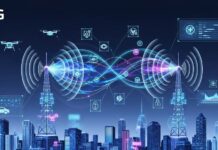






The modern enterprise is no longer a physical entity contained within four walls; it is a sprawling digital ecosystem that extends into the homes of employees, the servers of cloud providers, and the sensors of global supply chains. This hyperconnectivity is the lifeblood of modern business, driving efficiency, innovation, and global reach. However, it also creates an unprecedented level of risk. The traditional “castle and moat” approach to security where a strong perimeter protected the “safe” interior from the “dangerous” exterior is no longer viable. In an environment where the perimeter is everywhere and nowhere, a new approach is required. Developing effective cybersecurity hyperconnected enterprises strategies is the most critical challenge facing corporate leadership today, requiring a shift in mindset from simple defense to comprehensive, intelligent resilience.
The Paradigm Shift to Zero Trust Security
In a hyperconnected world, the most fundamental principle of security is “never trust, always verify.” This is the core of the Zero Trust security model. In this framework, no user, device, or application is ever granted inherent trust based on its location or its history. Every request for access to a corporate resource whether it’s an employee logging in from their home office or an automated service querying a database must be authenticated and authorized in real-time. By implementing granular access controls and identity-centric security, organizations ensure that even if an attacker gains access to one part of the network, they cannot move laterally to other sensitive areas. This containment is essential for cybersecurity hyperconnected enterprises, as it minimizes the “blast radius” of any single breach and ensures that the organization’s most valuable data remains protected.
Harnessing AI Threat Detection for High-Speed Defense
The speed and complexity of modern cyber threats have surpassed the limits of human cognition. Attackers now use automated tools and artificial intelligence to identify vulnerabilities and launch coordinated strikes across multiple platforms simultaneously. To counter this, enterprise cybersecurity must employ its own AI threat detection systems. These systems use machine learning to analyze the “pulse” of the network, identifying subtle anomalies that might indicate a sophisticated attack in its early stages. Unlike traditional signature-based antivirus software, which only recognizes known threats, AI can identify “zero-day” attacks by spotting behavioral deviations. This proactive defense is critical for maintaining the integrity of a hyperconnected enterprise, where a single minute of delay in response can lead to the loss of millions of records.
Securing the Cloud Security Solutions Ecosystem
The migration of critical business functions to the cloud has introduced a new layer of security complexity. While major cloud providers offer robust physical security, the responsibility for securing the data and applications within the cloud rests solely with the enterprise. This requires a suite of specialized cloud security solutions that can manage risk across hybrid and multi-cloud environments. One of the most significant challenges is “configuration drift,” where small changes made by different teams over time create security holes. Automated security posture management tools are now essential for maintaining a consistent and secure configuration. By treating security as an automated, continuous process rather than a one-time audit, hyperconnected enterprises can ensure that their cloud-based assets are always protected against the latest threats.
Building a Culture of Cyber Resilience Strategy
Technology alone is never a silver bullet. A truly secure enterprise is one where security is woven into the very fabric of the corporate culture. This is the essence of a cyber resilience strategy. Resilience is the recognition that no security system is perfect, and that the goal is not just to prevent attacks, but to ensure the business can continue to function while under fire. This requires a comprehensive approach that includes everything from regular employee training to the maintenance of immutable, air-gapped data backups. When every employee from the CEO to the newest intern understands the role they play in protecting the organization, the collective security of the enterprise is transformed. A culture of awareness is the best defense against social engineering and phishing, which remain the primary entry points for even the most sophisticated cyber attacks.
Protecting the Network Security of IoT and the Edge
The explosion of IoT devices from smart thermostats in the office to industrial sensors on the factory floor has created millions of new entry points for attackers. Many of these devices lack the processing power for traditional security software, making them easy targets for those looking to build botnets or gain a foothold in the corporate network. Securing the network security of a hyperconnected enterprise requires a strategy of aggressive segmentation. IoT devices should be isolated on their own dedicated networks, with strict firewalls preventing them from communicating with core business systems. Furthermore, as data processing moves to the “edge” to reduce latency, security must move with it. Protecting data at its point of origin is the only way to ensure the integrity of the real-time systems that drive modern industry.
The Role of Identity as the New Perimeter
In a world without physical boundaries, identity has become the new perimeter. Every security decision must revolve around the question: “Who is accessing this data, and do they have the right to do so right now?” This requires a shift toward sophisticated identity and access management (IAM) systems that incorporate multi-factor authentication (MFA) and behavioral biometrics. By analyzing how a user types, how they move their mouse, and what time of day they typically work, these systems can identify an impostor even if they have stolen a legitimate set of credentials. For cybersecurity hyperconnected enterprises, managing these digital identities is the most effective way to protect the organization’s assets in a world where everyone is working from everywhere.
Supply Chain Security and the Risk of Third-Party Access
The hyperconnected enterprise is also deeply integrated with its partners and suppliers. This integration is a major source of efficiency, but it also creates a significant “supply chain” risk. If a supplier’s security is compromised, attackers can use their trusted access to infiltrate the primary enterprise. To mitigate this, organizations must extend their security requirements to every partner in their ecosystem. This includes conducting regular security audits of third-party providers and implementing the principle of least privilege for all external connections. A chain is only as strong as its weakest link, and in the digital world, your security is only as good as the security of the least-protected company in your supply chain.
Preparing for the Future: Quantum Risks and Adaptive Security
Looking ahead, the arrival of quantum computing represents a potential “doomsday” scenario for traditional encryption. Systems that would take current computers thousands of years to crack could be compromised by a quantum computer in minutes. Forward-thinking enterprises are already exploring quantum-resistant cryptography as part of their long-term cyber resilience strategy. However, the future of security is not just about better encryption; it’s about adaptive security architectures that can evolve in real-time. By using AI to continuously learn from new threats and automatically update the organization’s defense posture, we can create an environment that is not just more secure today, but ready for the challenges of tomorrow.
Key Takeaways:
- Zero Trust is the essential framework for securing the hyperconnected enterprise, replacing the outdated “perimeter” model with continuous, identity-based verification.
- AI-driven threat detection provides the high-speed response required to neutralize modern, automated cyber attacks before they can cause significant damage.
- Resilience is a cultural and operational goal, ensuring that the organization can maintain business continuity and recover quickly even after a successful breach.