




















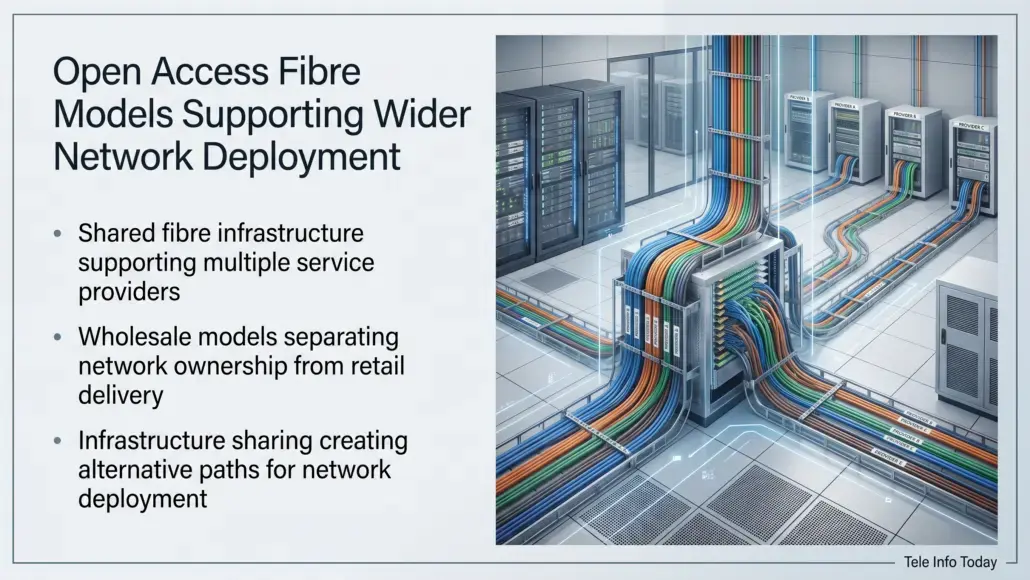

The fibre investment cycle is creating greater interest in open access fibre models that separate network infrastructure from retail service delivery. Rather than requiring every operator to build and maintain a complete physical network, these structures allow infrastructure owners to provide wholesale access to multiple service providers, creating different ways to finance, deploy and utilise fibre assets. The European Commission identifies several wholesale only structures, ranging from passive infrastructure access to active network provision and mediated models in which infrastructure and network operations are divided. This creates a broader set of investment and operating arrangements as fibre deployment expands across international markets.
The model is not limited to one regulatory environment. Australia’s NBN operates as a wholesale only network, while Singapore’s nationwide broadband architecture separates passive and active network roles and incorporates open access for service providers. In Latin America, private infrastructure platforms such as V.tal in Brazil and OnNet Fibra in Chile and Colombia illustrate how existing fibre assets can be structured as independent wholesale businesses. South Africa also has multiple fibre infrastructure providers operating on an open access basis. These examples show that open access fibre can emerge through public infrastructure programmes, regulatory frameworks, private investment and the restructuring of incumbent networks.
The underlying objective differs across markets, but the common principle is the use of shared infrastructure to support multiple providers. This can reduce the need for every service provider to duplicate elements of physical deployment, while allowing retail operators to compete through pricing, services and customer relationships. However, open access fibre does not automatically produce greater competition or lower costs. The outcome depends on wholesale terms, access pricing, network governance, investment incentives and the extent to which providers can make effective use of the infrastructure.
Wholesale Models Creating New Structures for Fibre Deployment
The European Commission’s framework distinguishes between passive layer, active layer and mediated wholesale only models, showing how infrastructure ownership and service delivery can be separated at different points in the network. This separation gives operators and investors additional ways to organise fibre deployment while potentially broadening the number of providers able to use the same underlying infrastructure.
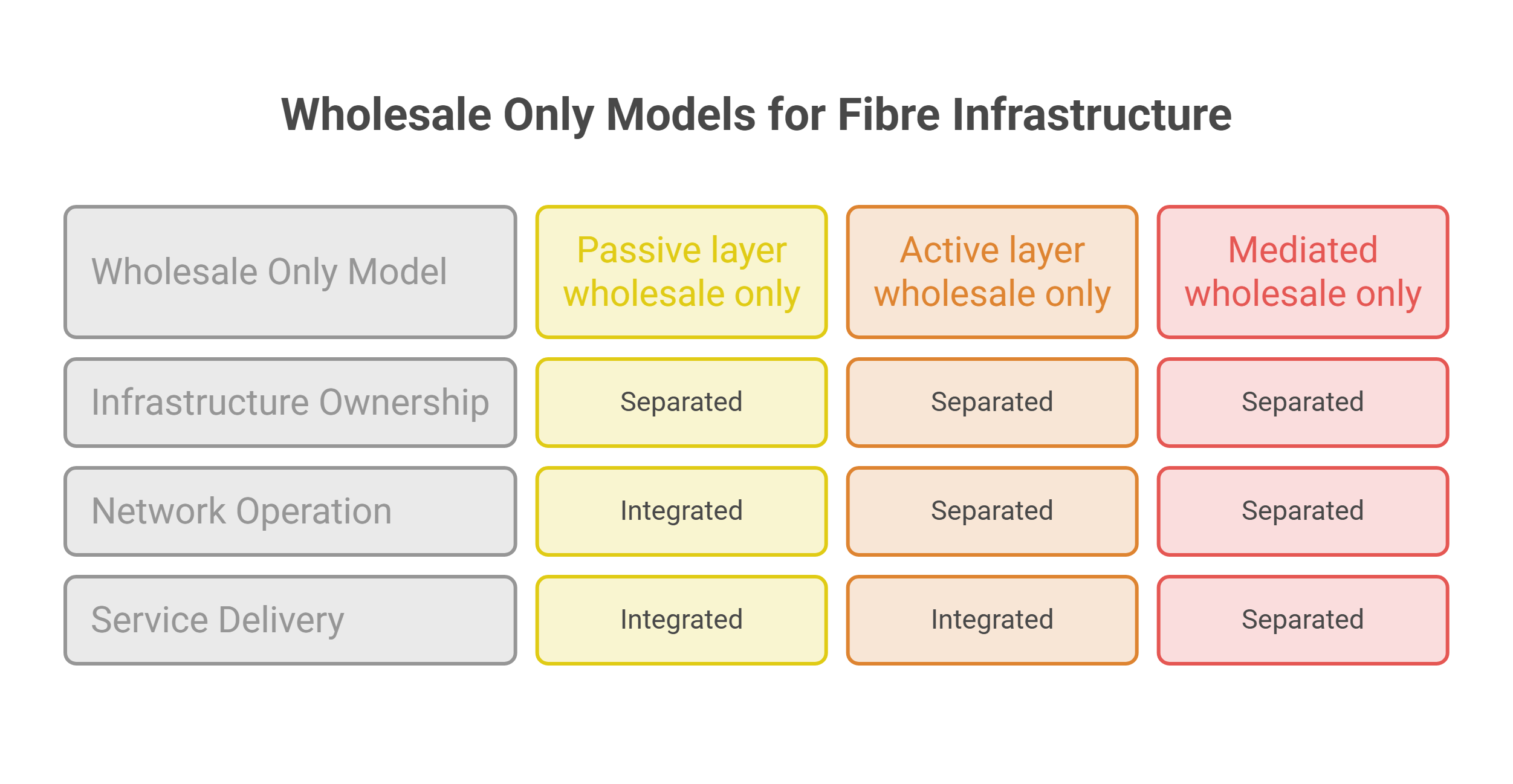
Key Takeaway: Open access can separate infrastructure ownership from network and retail services through different wholesale models, creating alternative structures for deploying and sharing fibre networks.