




















Telecom networks contain security signals that banks, fintechs and other digital services may not be able to observe directly, including changes to SIM and device relationships, mobile-number associations and other network-level indicators. As these capabilities become accessible through standardised interfaces, network API fraud prevention is extending telecom security beyond the operator’s own systems. Tele Info Today notes that the development is creating a more connected security model in which network-derived signals can support fraud assessment across the wider digital ecosystem.
Telecom Networks are Becoming Sources of Fraud Signals
A financial institution can identify an unusual login or transaction, but it may not independently know whether a customer’s SIM was recently replaced or whether the mobile number is still associated with the device being used. Telecom operators can provide those signals because the network has direct visibility into subscriber and device relationships.
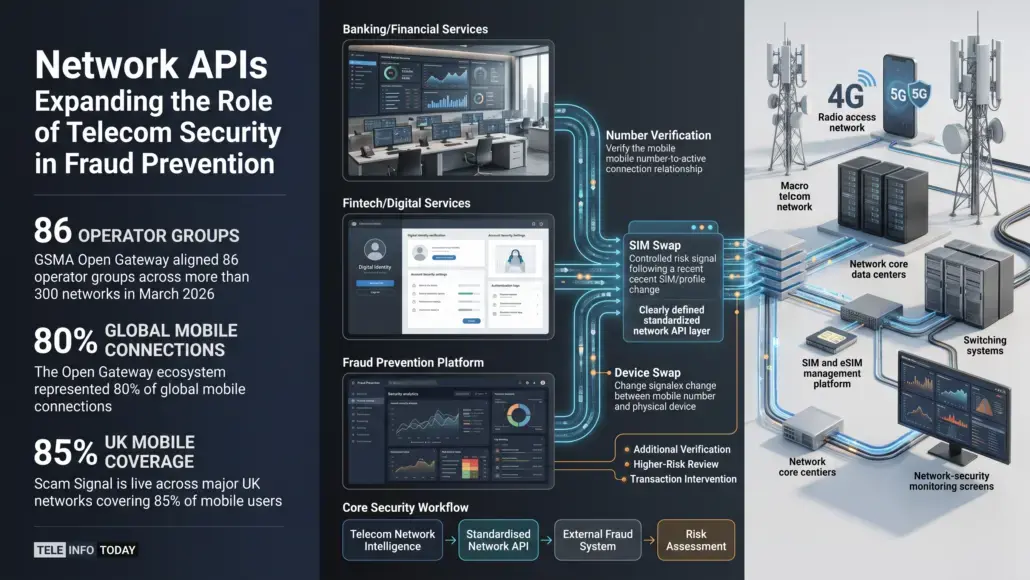
This creates an additional layer of risk intelligence. Number Verification can help confirm whether the mobile number being used by an application matches the number associated with the mobile connection. SIM Swap can indicate whether a recent SIM change has occurred, while Device Swap can identify a change in the relationship between a mobile number and physical device.
These capabilities do not determine that fraud has occurred. Instead, they give an external service another security signal that can be combined with transaction behaviour, account history and authentication data. Network API fraud prevention therefore works as part of a broader risk-assessment process rather than as an isolated fraud-detection tool.
Network APIs are Making Security Signals Accessible
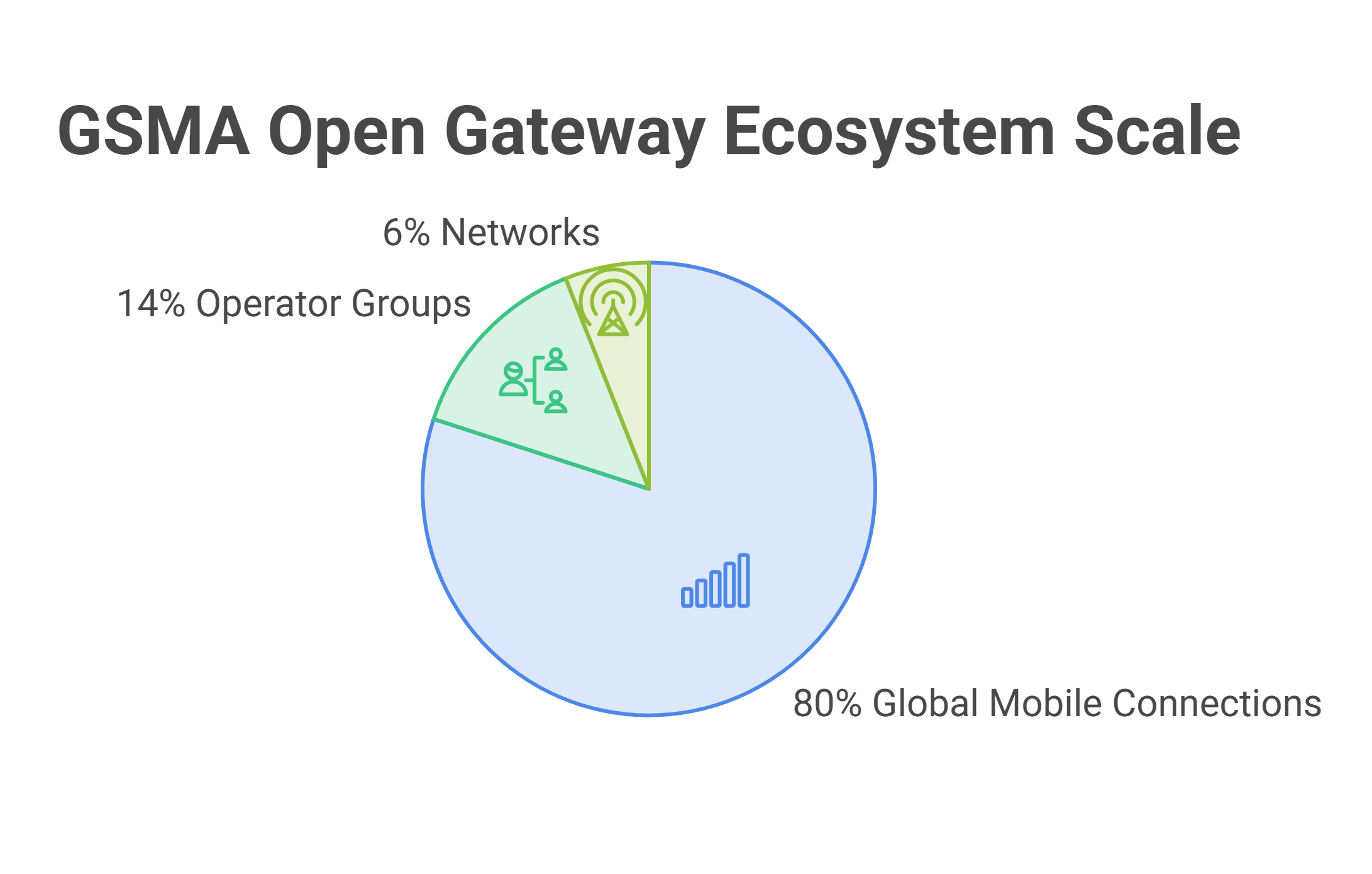
The development is being supported by the GSMA Open Gateway and CAMARA ecosystems, which are creating standardised interfaces for exposing selected mobile-network capabilities to authorised applications. In March 2026, GSMA reported that its Open Gateway framework covered 86 operator groups and more than 300 networks, representing 80% of global mobile connections.
The scale of the ecosystem matters because fraud-prevention applications become more practical when they can access consistent network capabilities across multiple operators and markets. Standardised APIs can reduce the need for separate integrations while allowing operators to retain control over how network information is exposed.
For network API fraud prevention, this creates a new relationship between telecom cybersecurity and external digital services. Network security signals can move through controlled interfaces into fraud-management systems, where they can help determine whether an interaction requires additional verification or intervention.
Key Takeaway: The expanding global network-API ecosystem is creating a wider infrastructure through which trusted telecom security signals can support fraud prevention beyond the operator’s own network.