






















Artificial intelligence is transforming far more than enterprise applications and digital services. Its rapid adoption is fundamentally changing the infrastructure that supports modern communications, creating unprecedented demand for high-capacity networks, low-latency connectivity, and scalable digital ecosystems. As organizations deploy increasingly sophisticated AI models and data-intensive workloads, AI Data Centres are emerging as critical infrastructure that underpins the next generation of digital transformation.
Unlike conventional data centres that primarily support cloud computing and enterprise applications, AI Data Centres are designed to process enormous volumes of data generated by artificial intelligence, machine learning, and high-performance computing workloads. These facilities require significantly greater computing power, storage capacity, and network performance, placing new demands on telecommunications infrastructure. As a result, telecom operators and infrastructure providers are investing in network modernization to ensure that data can move efficiently between users, cloud environments, and distributed computing resources.
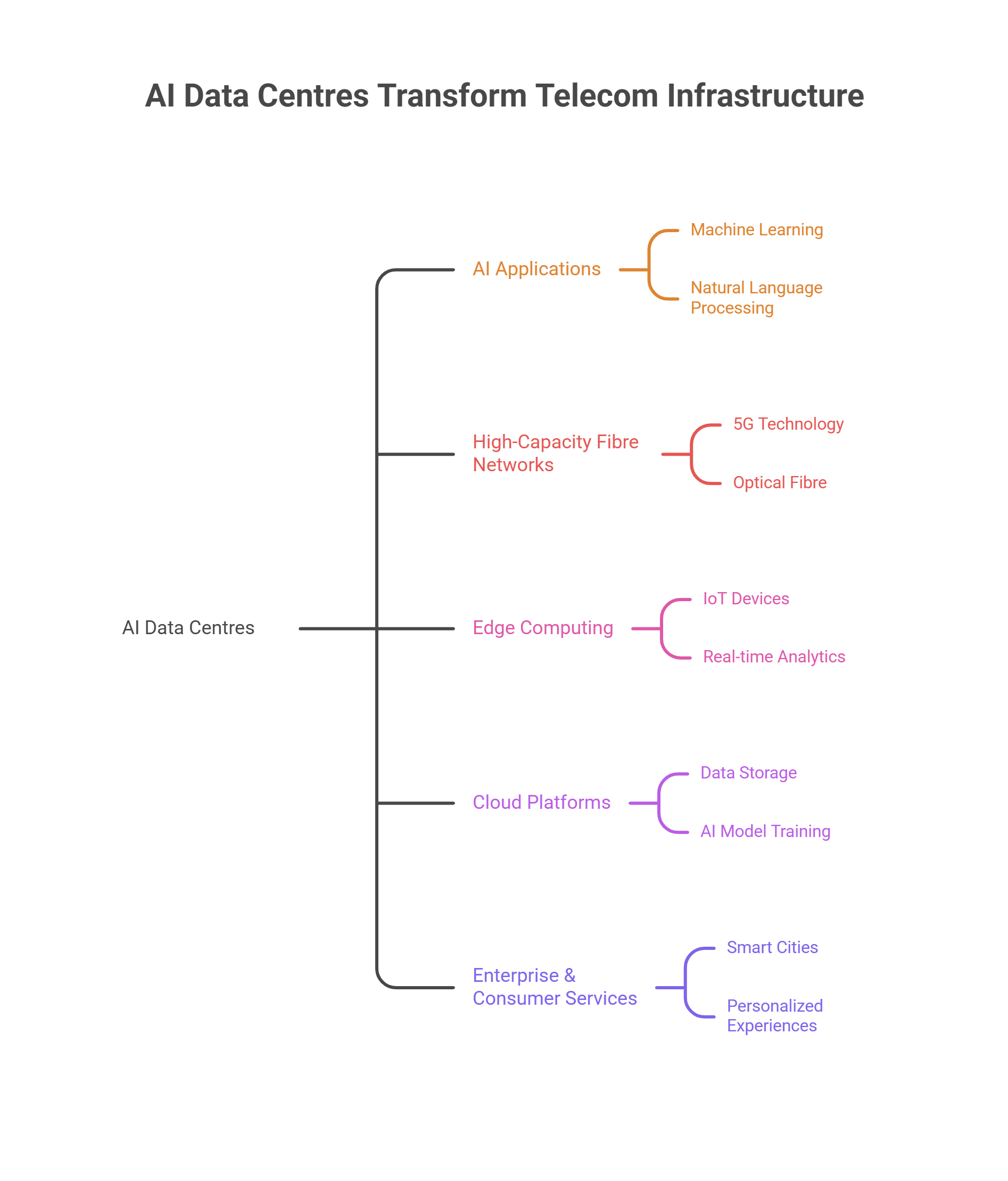
The growing importance of AI Data Centres extends beyond computing capacity alone. High-bandwidth fibre networks, optical transport systems, edge computing infrastructure, and data centre interconnect technologies are becoming essential for supporting AI-driven applications that require real-time processing and seamless connectivity. This convergence is reshaping how telecommunications networks are planned, deployed, and managed to meet the evolving requirements of an increasingly AI-powered economy.
As demand for intelligent digital services continues to accelerate, AI Data Centres are becoming strategic assets that influence network architecture, infrastructure investment, and long-term capacity planning across the global telecommunications industry.
AI Data Centres Are Driving a New Era of Network Demand
Traditional telecommunications networks were primarily designed to support voice services, internet access, and enterprise communications. While these services continue to grow, the rapid expansion of AI Data Centres is creating a different category of network demand characterized by extremely high bandwidth, ultra-low latency, and continuous data movement between distributed computing environments.
Artificial intelligence applications generate and process significantly larger datasets than conventional enterprise workloads. Training advanced AI models, running inference engines, and supporting generative AI services require continuous communication between computing clusters, cloud platforms, storage systems, and end users. As AI Data Centres expand globally, telecommunications infrastructure must evolve to accommodate these increasingly demanding traffic patterns.
This shift is changing how network capacity is planned. Rather than focusing solely on consumer broadband growth, operators are strengthening backbone infrastructure capable of transporting massive volumes of data between interconnected data centres while maintaining consistent performance. High-capacity connectivity is becoming a strategic requirement for supporting AI-driven digital ecosystems rather than simply expanding network throughput.
High-Capacity Networks Are Becoming Essential Infrastructure
The expansion of AI Data Centres is accelerating investment in high-capacity telecommunications networks capable of supporting increasingly complex digital workloads. Fibre-optic infrastructure remains the foundation of this transformation, providing the bandwidth necessary to transport massive amounts of information between computing facilities, enterprise environments, and cloud platforms with minimal latency.
Optical networking technologies are becoming increasingly important as traffic generated by AI Data Centres continues to grow. Higher-capacity optical transport systems enable telecommunications providers to support greater data volumes while improving efficiency across long-distance and metropolitan networks. These technologies help ensure that AI applications can access distributed computing resources without compromising performance or reliability.
The demand for network scalability is also influencing long-term infrastructure planning. Instead of expanding capacity only after congestion occurs, operators are increasingly designing networks capable of supporting future AI workloads, recognizing that artificial intelligence will continue driving sustained growth in digital traffic across enterprise and consumer services alike.
Data Centre Interconnect Is Becoming a Strategic Network Priority
As the number and scale of AI Data Centres continue to grow, the ability to transfer massive volumes of data between facilities has become increasingly important. This has elevated the role of Data Centre Interconnect (DCI), which provides the high-capacity links that connect geographically distributed data centres and cloud environments. Rather than functioning as isolated facilities, modern AI Data Centres operate as interconnected ecosystems where continuous data exchange supports AI training, inference, storage, and enterprise applications.
The expansion of DCI is driving greater investment in high-capacity optical transport networks capable of delivering low-latency, high-bandwidth connectivity across metropolitan, regional, and international routes. These networks enable organizations to distribute computing workloads efficiently, improve resilience through redundancy, and optimize the use of available computing resources across multiple locations. As AI workloads continue to increase, DCI is becoming an essential component of telecom infrastructure rather than simply a supporting network service.
The growing importance of AI Data Centres also highlights the need for scalable network architectures capable of supporting future demand. Telecommunications providers are increasingly modernizing optical infrastructure to improve network efficiency while ensuring that data can move seamlessly between computing facilities, cloud platforms, and enterprise environments.
Edge Computing Is Extending the Reach of AI Data Centres
While centralized AI Data Centres provide the computational power required for large-scale artificial intelligence workloads, not every application can rely solely on centralized processing. Many AI-powered services require immediate decision-making, making low latency a critical operational requirement. This is driving the expansion of edge computing, where data is processed closer to users, connected devices, and enterprise operations.
Rather than replacing centralized facilities, edge computing complements AI Data Centres by distributing processing across multiple locations. This architecture reduces network congestion, shortens response times, and improves the performance of applications such as industrial automation, connected vehicles, healthcare systems, financial services, and smart city infrastructure.
The relationship between edge computing and AI Data Centres is creating a more distributed telecommunications ecosystem capable of supporting increasingly sophisticated digital services. High-capacity backbone networks transport large-scale AI workloads between data centres, while edge infrastructure enables localized processing for applications that depend on real-time intelligence. Together, these technologies are reshaping how telecom networks deliver both scalability and performance.
Infrastructure Challenges Will Shape the Next Phase of Growth
The rapid expansion of AI Data Centres is creating new opportunities for telecommunications infrastructure, but it also presents significant operational challenges. Supporting AI workloads requires far greater computing power, higher network capacity, and increased energy availability than conventional enterprise applications. As a result, infrastructure planning is becoming increasingly complex as operators balance performance, sustainability, and long-term scalability.
Power availability has emerged as one of the most significant considerations for new AI Data Centres. High-performance computing environments consume substantially more electricity than traditional facilities, increasing demand for reliable energy infrastructure and efficient cooling technologies. At the same time, telecommunications networks must continue expanding fibre capacity, optical transport systems, and interconnection infrastructure to accommodate rapidly growing AI traffic.
Cybersecurity and network resilience are becoming equally important. As AI Data Centres handle increasingly critical enterprise workloads, protecting network infrastructure, maintaining service availability, and ensuring secure data transmission remain essential priorities. Future network expansion will therefore require not only greater capacity but also stronger operational resilience capable of supporting business-critical AI services.
AI Data Centres Are Defining the Future of Telecom Infrastructure
The evolution of telecommunications infrastructure is increasingly being shaped by artificial intelligence rather than traditional network growth alone. AI Data Centres are becoming central to this transformation by driving demand for higher-capacity networks, intelligent traffic management, distributed computing, and more resilient digital infrastructure.
Future telecom networks will need to support continuous data movement across cloud platforms, edge locations, enterprise environments, and interconnected data centres while maintaining high performance and operational efficiency. This will require ongoing investment in fibre networks, optical transport, cloud-native architectures, and intelligent network management systems capable of adapting to rapidly evolving AI workloads.
As organizations continue expanding AI adoption across industries, AI Data Centres will remain at the centre of digital infrastructure planning. Their growing influence extends beyond computing capacity, reshaping how telecommunications networks are designed, scaled, and optimized to support the next generation of intelligent digital services.
Conclusion
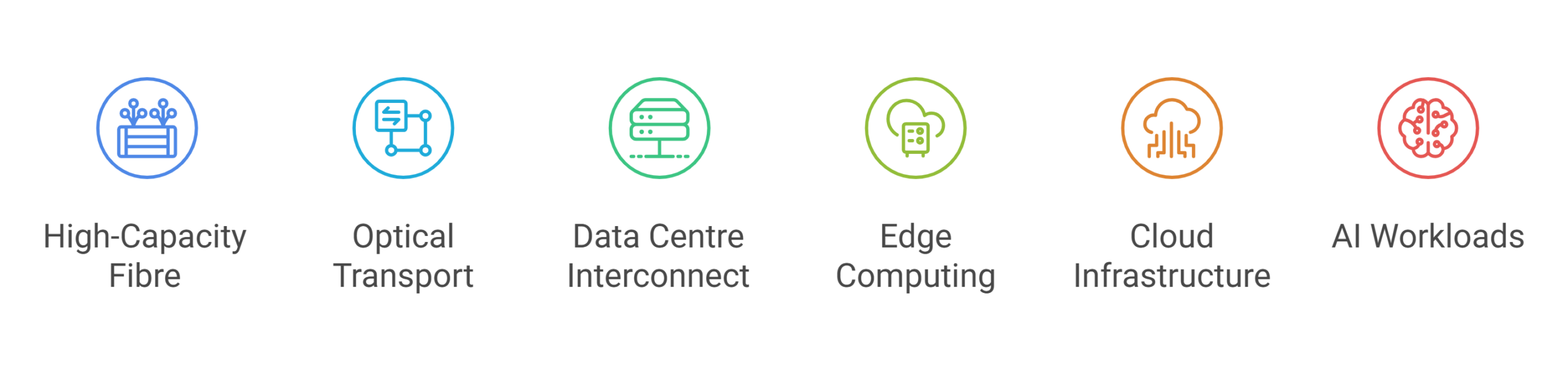
The rise of AI Data Centres represents more than an increase in computing capacity. It marks a fundamental shift in how telecommunications infrastructure is planned, deployed, and managed to support increasingly data-intensive digital environments. High-capacity fibre networks, optical transport systems, Data Centre Interconnect, and edge computing are becoming essential components of AI-ready telecom infrastructure capable of delivering the bandwidth, scalability, and resilience required by modern enterprises.
While challenges surrounding power availability, network scalability, cybersecurity, and infrastructure investment remain, the continued expansion of AI Data Centres is accelerating the modernization of telecommunications networks worldwide. As artificial intelligence becomes more deeply integrated into business operations and digital services, AI Data Centres will continue shaping the future of connected infrastructure and next-generation telecom networks.