




















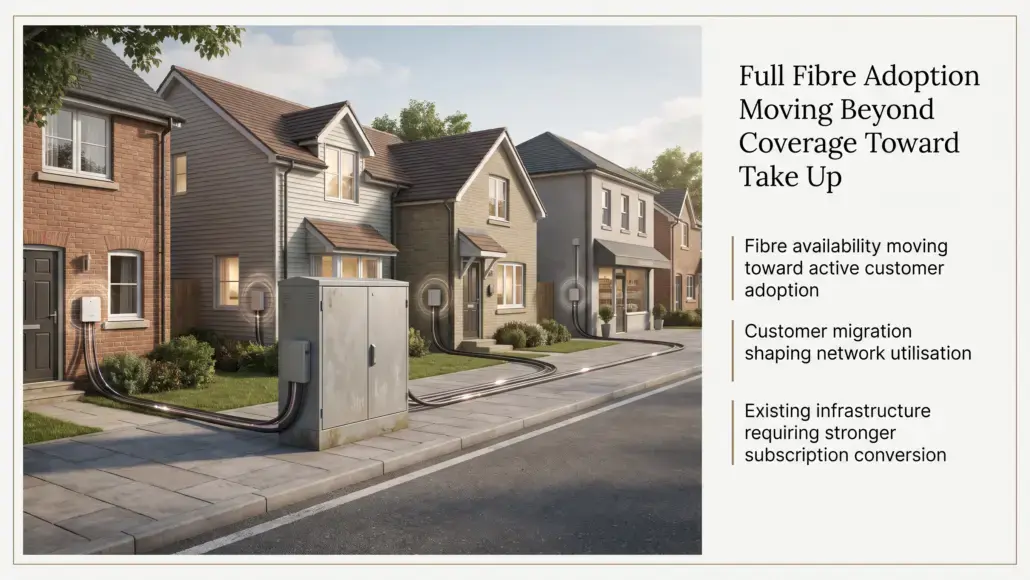

The fixed broadband industry is entering a more mature phase as full fibre adoption becomes increasingly important alongside network coverage. In many established markets, operators have already made substantial progress in extending fibre to homes and businesses, shifting the commercial question from where fibre can be deployed to how effectively available connections are converted into active subscriptions. The distinction matters because a network can pass a large share of premises without achieving the same level of customer migration. This is creating greater emphasis on adoption, utilisation and the commercial performance of infrastructure that has already been built.
European data illustrates the gap. The FTTH Council Europe reported approximately 295 million homes passed by FTTH or FTTB networks across EU39 in September 2025, representing around 79% household coverage. At the same time, the region had approximately 160 million subscribers and an average take up rate of about 54%. These figures show that availability and active usage are developing at different speeds. The result is a shift in focus for operators, with full fibre adoption becoming increasingly relevant to decisions about customer migration, service positioning and network utilisation.
The UK provides another indication of this transition. Ofcom reported that full fibre was available to 82% of UK homes by January 2026, while full fibre connections across residential and commercial premises reached 12.4 million. Ofcom also identifies factors such as customer awareness and existing broadband contracts as reasons adoption can lag behind availability. This means that full fibre adoption depends on more than physical network reach. Retail offers, migration timing, customer communications and competing network choices can all influence how quickly available fibre capacity becomes active service.
As markets move deeper into this adoption phase, operators are also considering how to make better use of fibre infrastructure already in place, particularly where overlapping networks or slower migration leave capacity underused.
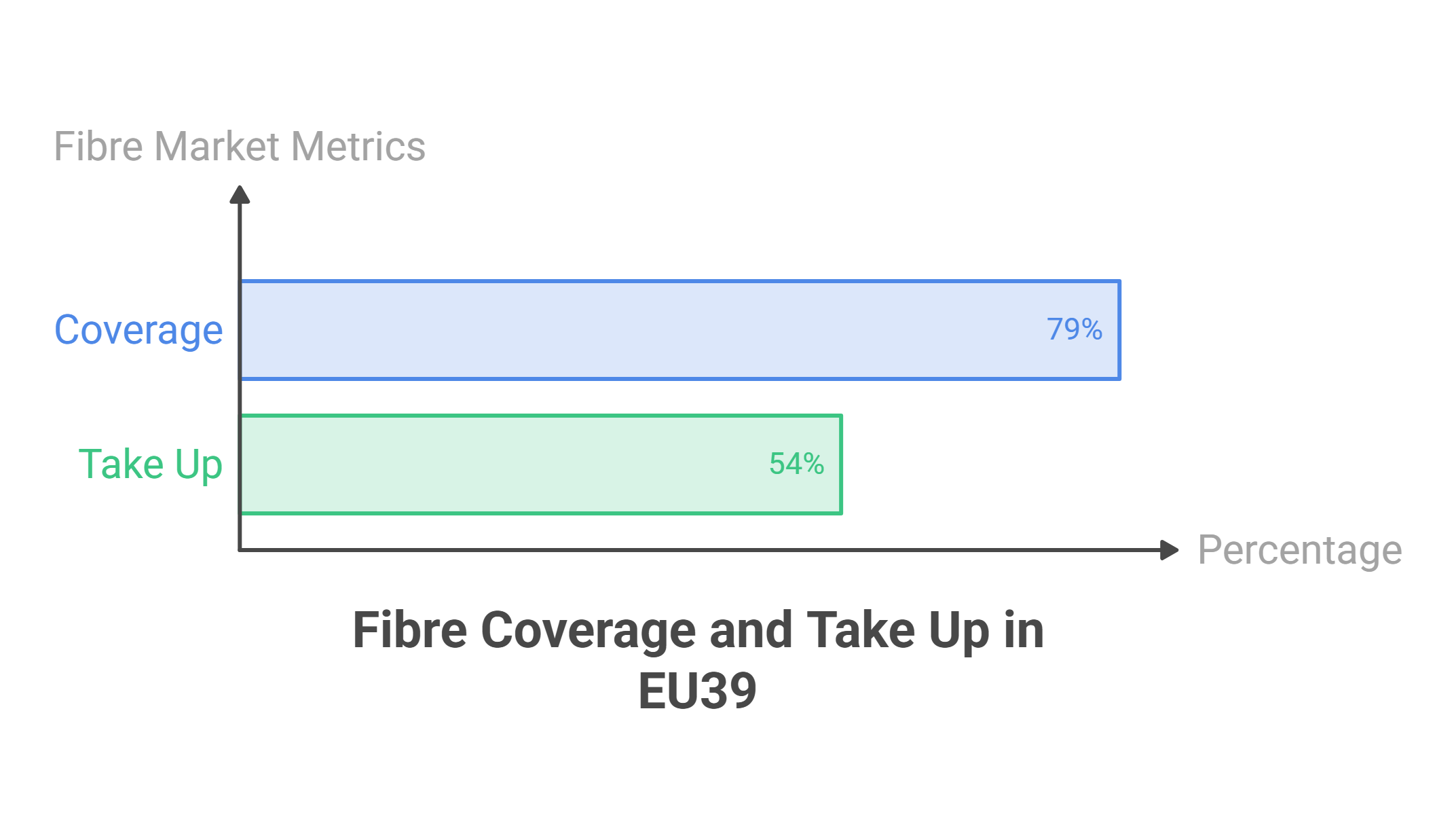
Key Takeaway: Fibre availability is ahead of active adoption across European markets, increasing the importance of customer conversion and network utilisation as deployment matures.